


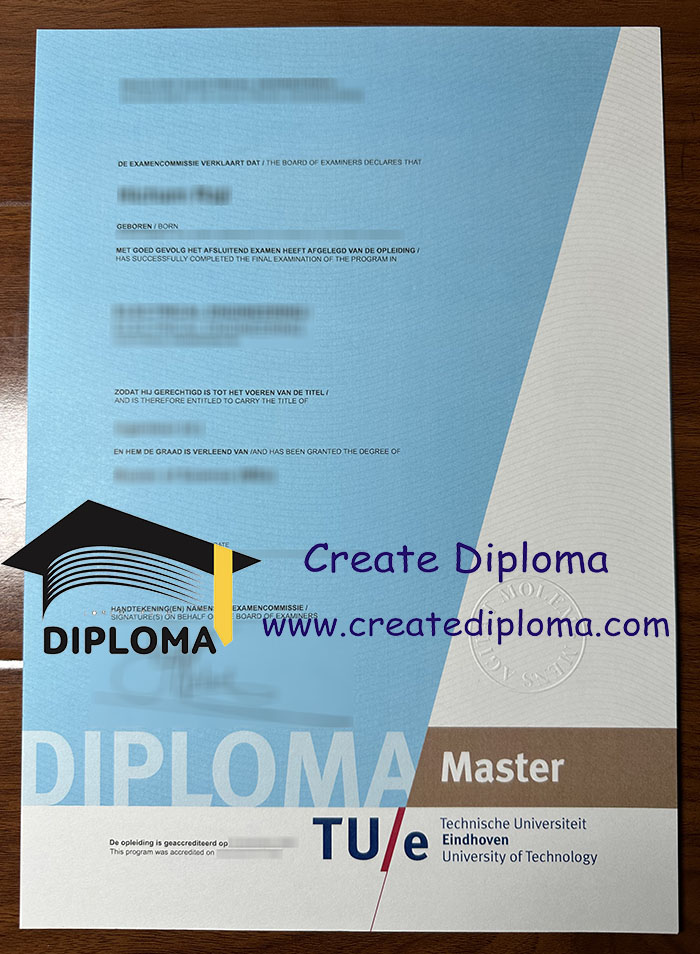
How to get a Technische Universiteit Eindhoven diploma online? Where to get a realistic Technische Universiteit Eindhoven diploma? Earning an MSc diploma from Technische Universiteit Eindhoven (TU/e) is a transformative step toward a future defined by innovation, leadership, and global relevance. Located in the heart of the Netherlands’ high-tech region, TU/e is one of Europe’s most prestigious technical universities, consistently ranked among the top 100 universities worldwide. Renowned for its cutting-edge research, industry collaboration, and student-centered education, TU/e offers Master of Science (MSc) programs that blend academic depth with real-world application—preparing graduates for impactful careers in engineering, technology, and beyond.
Why Pursue an MSc at Technische Universiteit Eindhoven?
The Technische Universiteit Eindhoven MSc diploma is designed for ambitious students seeking to solve complex global challenges—from sustainable energy and smart cities to healthcare technology and artificial intelligence. With over 30 English-taught MSc programs, TU/e provides specialized tracks in fields such as Mechanical Engineering, Electrical Engineering, Data Science, Biomedical Engineering, Innovation Sciences, and Sustainable Chemistry.
What sets TU/e apart is its unique challenge-based learning approach. Instead of traditional lectures, students work in multidisciplinary teams to tackle real industry problems, often in partnership with global companies like ASML, Philips, Siemens, and Tesla. This hands-on methodology ensures that graduates don’t just understand theory—they know how to apply it.
World-Class Research and Industry Integration
TU/e is a core member of the EuroTeQ Engineering Universities Alliance, a European network fostering innovation and digital transformation. The university hosts state-of-the-art research facilities, including the Eindhoven Hendrik Casimir Institute for Physical Sciences and the Institute for Complex Molecular Systems. Over 40% of TU/e’s research is conducted in collaboration with industry, giving students direct access to real projects, internships, and potential employers.
MSc students also benefit from TU/e’s strong entrepreneurship ecosystem. The High Tech Campus Eindhoven and TU/e Innovation Lab support student startups, with mentorship, funding, and incubation space—making it easier than ever to turn ideas into ventures.
International Environment and Student Support
With over 30% of its student body from outside the Netherlands, TU/e offers a truly international atmosphere. The university provides comprehensive support for international students, including visa guidance, housing assistance, Dutch language courses, and career coaching. The Career Orientation & Development (COD) office connects students with job fairs, company presentations, and alumni networks across Europe and beyond.
Graduates of the Technische Universiteit Eindhoven MSc diploma program are highly sought after. According to recent data, 95% of TU/e MSc graduates find employment within six months, with many entering leadership roles in R&D, engineering consultancies, or tech startups. The diploma is recognized globally and accredited by the Dutch-Flemish Accreditation Organisation (NVAO), ensuring it meets the highest European educational standards.
Life in Eindhoven: A City That Inspires Innovation
Eindhoven is more than a university town—it’s a living lab for smart technology and design. Known as the “City of Light” due to its Philips heritage, it hosts the annual Dutch Design Week and is a hub for the Internet of Things (IoT) and smart mobility. With a high quality of life, affordable living costs (compared to other European tech cities), and excellent public transport, it’s an ideal place to study, live, and innovate.
Start Your Future with a TU/e MSc Diploma
Whether you aim to lead R&D teams, launch a tech startup, or contribute to sustainable global development, the Technische Universiteit Eindhoven MSc diploma equips you with the knowledge, network, and mindset to succeed. Join a university that doesn’t just teach engineering—but redefines what it can do.