









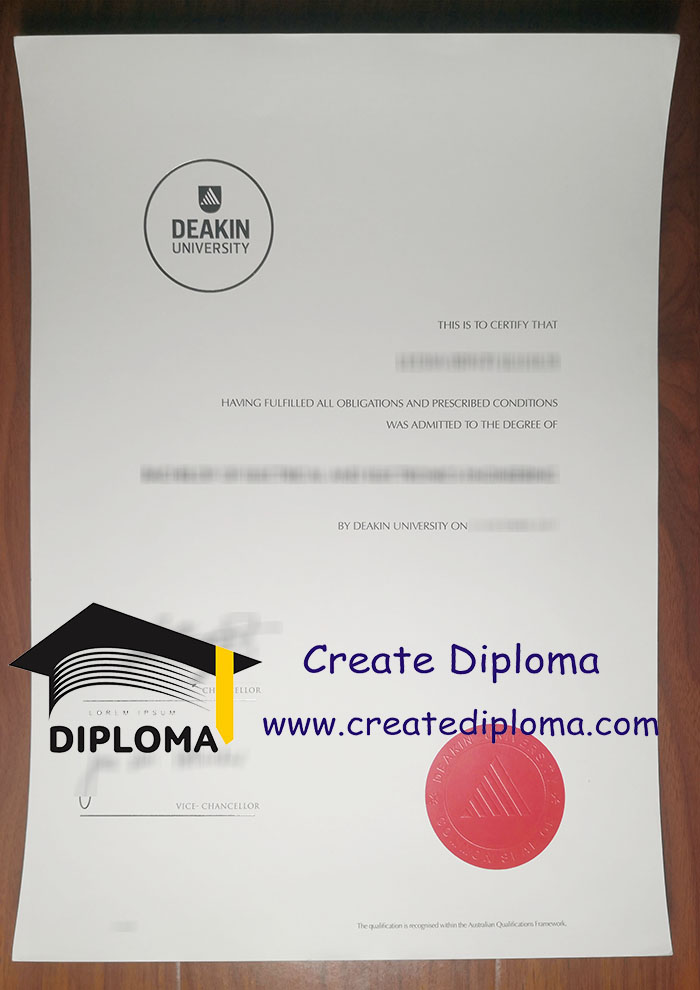
Actionable way to create a Deakin University diploma online. Where to get a realistic Deakin University diploma safely? Earn a globally respected Deakin University Bachelor of Electrical and Electronics Engineering diploma and launch a dynamic career at the forefront of technology. Accredited by Engineers Australia and aligned with the Washington Accord, this comprehensive undergraduate program equips students with the skills to design, optimize, and innovate in power systems, automation, robotics, telecommunications, and smart technologies.
How does a Deakin University diploma certificate look like?
Offered by Deakin’s School of Engineering, the Bachelor of Electrical and Electronics Engineering combines theoretical knowledge with hands-on practical experience. Students work on real-world projects, including renewable energy systems, embedded systems, and Internet of Things (IoT) applications. With access to cutting-edge labs and industry-standard equipment, learners gain proficiency in circuit design, signal processing, control systems, and sustainable energy solutions.
A key advantage of the Deakin University engineering diploma is its strong industry integration. Students complete professional engineering placements, gaining valuable work experience with leading companies such as Siemens, ABB, and EnergyAustralia. This real-world exposure enhances employability and helps build professional networks before graduation.
The reasons to obtain a Curtin University diploma certificate.
The curriculum emphasizes sustainability, innovation, and problem-solving—preparing graduates for emerging fields like electric vehicles, smart grids, and automation. With flexible study options, including on-campus and cloud (online) learning, Deakin supports diverse student needs. International students benefit from modern facilities, dedicated support services, and Australia’s high quality of life.
Graduates of the Deakin Bachelor of Electrical and Electronics Engineering are in high demand across sectors including energy, manufacturing, telecommunications, and infrastructure. Career paths include roles as electrical engineers, systems designers, automation specialists, and project managers.